

Although it remains exceedingly hazy what applies—and whether it ultimately applies at all—regarding the energy ceasefire between Russia and Ukraine announced by US President Donald Trump, behind-the-scenes dynamics suggest a profound geopolitical realignment is underway concerning the Ukrainian crisis. The rapid developments of the past 24 hours confirm that Washington wishes to redefine its priorities regarding the Ukrainian issue, at a time when Moscow reportedly claims significant diplomatic and economic gains without making the slightest concession, and while Kyiv faces the risk of an unprecedented rupture with its most powerful ally.
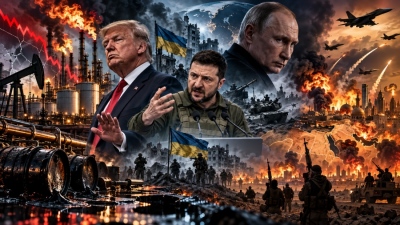
Donald Trump's anger toward Volodymyr Zelensky, the sudden postponement of Steve Witkoff and Jared Kushner's visit to Moscow, and the controversial US-Russian diesel deal compose the backdrop of a crisis that now transcends the boundaries of the Ukrainian conflict. Many western media outlets assess that Trump appears determined to place energy stability and American economic interests above Kyiv's demands, even as Putin attempts to turn the conjuncture into a strategic advantage for Russia. For Zelensky, the stakes are no longer confined to battlefield developments but extend to the very viability of American support and his own regime, while for Europe, the prospect of a US-Russian understanding without substantive security guarantees for Ukraine threatens to undermine existing sanctions policy and expose deep fractures within the Western alliance. Many analysts hasten to point out that it is entirely possible Trump will once again cave to pressure from allies and scrap the deal. Others, however, estimate it is equally possible we are witnessing a broader geopolitical agreement that upends current war balances.
Russia's initial reaction to energy ceasefire: Contacts continue
In an initial reaction from Moscow, Kremlin spokesperson Dmitry Peskov maintained that Russia views American negotiators' efforts toward settling the conflict in Ukraine positively and expresses gratitude for the continuation of these efforts. Referring to the prospect of an energy ceasefire, the Kremlin spokesperson avoided providing specific details, while confirming that contacts are ongoing. "Contacts are continuing. As soon as we have something to announce on this issue, we will certainly inform you," Peskov stated. As he noted, Russia does not seek a temporary truce but a lasting peace, and Moscow is ready to do everything possible to achieve this goal, responding thus to Zelensky's statement leaving open the possibility of holding elections in Ukraine provided Russian President Vladimir Putin agreed to a 60-day ceasefire. Referring to the stance of Europeans, Peskov underlined that Europeans evidently do not belong to the "peace party" seeking a peaceful settlement of the conflict in Ukraine. Instead, Europe represents more the "war party," Peskov stressed, noting that Russia does not seek to drive a wedge between the US and Europe and that Moscow is searching for solutions allowing a peaceful settlement of the conflict.
Zelensky: Russians violated the ceasefire
Ukrainian President Volodymyr Zelensky accused Russia of violating the energy ceasefire announced by Trump following a strike on a thermal power plant in Kharkiv, and called on the United States to ensure Moscow abides by any agreement. Notably, Trump caught Kyiv and its European allies off guard by announcing over the weekend that Ukraine and Russia had agreed to an energy ceasefire, alongside announcing a deal to purchase diesel from Russia, provoking Ukraine's fury. As European officials expressed skepticism regarding the ceasefire, the European Union urged the US to maintain pressure on Moscow and approved new sanctions targeting Russia's military-industrial complex. Zelensky stated he still awaits details on the agreement, as Kyiv treats any arrangement it deems could offer Russia an advantage with reservation, unilaterally forcing Ukraine to halt strikes against Russian oil refineries. "There have been Russian violations of the energy ceasefire announced by President Trump," Zelensky stated via video link at a conference in Warsaw.
Kyiv waits...
"We are awaiting details of the terms agreed upon between Americans and Russians, and we expect to see a concrete step the Americans are willing to take," Zelensky stated, adding that he learned of the ceasefire agreement from the media. "This energy ceasefire can work and constitute a significant step toward ending the war if the Americans truly intervene now and ensure the Russians abide by the agreement," Zelensky said, noting Ukraine carried out no strikes against Russian refineries overnight. However, he made clear that if Russia wishes Kyiv to suspend these strikes, it must halt attacks against Ukraine's energy system and critical infrastructure.
Germany backs Zelensky
European Union foreign policy chief Kaja Kallas stated she would prefer a ceasefire "that also includes ending the loss of human lives," adding it remains unclear whether Russia will honor the agreement. "We call on the US to implement sanctions so we can truly end the war," she stated during a meeting of foreign ministers in Luxembourg. French President Emmanuel Macron stated he has seen no indication over the past 48 hours that Russia is adhering to any form of energy ceasefire agreement. For his part, German Foreign Minister Johann Wadephul expressed support for Volodymyr Zelensky amid his confrontation with US President Donald Trump. As Wadephul stated, Berlin "fully supports" the Ukrainian president "in fulfilling his difficult tasks." At the same time, the minister called for increased pressure on Russia to resume peace negotiations. "We must not reduce pressure on Vladimir Putin, but rather increase it to push him to the negotiating table. This is precisely what the current situation requires and this is the stance the government supports," the German official stated. Wadephul added that supporting Ukraine and pressuring Moscow to enter negotiations require "consistency and clarity."
The agreement
American negotiators Steve Witkoff and Jared Kushner postponed their visit to Moscow amid escalating disagreements between Washington and Kyiv, according to the news website Axios. According to its reports, Donald Trump is "furious" over Volodymyr Zelensky's reluctance to halt strikes against Russian oil refineries while the "diesel deal" between Moscow and Washington is underway. Trump announced an "energy ceasefire" which, however, neither side has officially agreed to. As Axios reports, discussions currently pertain exclusively to halting attacks on oil refining facilities. Reports indicate the United States allegedly threatened Ukraine with halting intelligence sharing from American intelligence agencies as well as weapon supplies through the Prioritised Ukraine Requirements List (PURL) mechanism to pressure Kyiv, according to a person familiar with the situation.
Waiting on Kyiv
US President Donald Trump's special envoy Steve Witkoff and the American president's son-in-law Jared Kushner postponed their trip to Moscow, Axios reports, citing White House sources. "Amid the crisis with Ukraine, the president's envoys, Steve Witkoff and Jared Kushner, postponed their scheduled trip to Moscow, at least until it is clarified whether Ukraine and European countries are willing to agree to a new, joint proposal to Russian President Vladimir Putin," the site points out. For its part, a TASS agency source stated the visit was not canceled but postponed until Kyiv's position is clarified.
Trump dissatisfaction with Zelensky
"The intention to carry out the visit still exists, but there are difficulties in understanding Kyiv's position. They will come, but only when they have a clear picture of this position," the TASS source stated. Axios sources maintain that changes in diplomatic planning are tied to intense dissatisfaction from US President Donald Trump toward Ukrainian leader Volodymyr Zelensky. "Trump is truly furious. He believes Zelensky takes American aid for granted," a White House spokesperson stated.
"Refinery for refinery"
Despite repeated White House appeals, Kyiv continued strikes against Russian oil refineries, contributing to rising diesel and gasoline prices on international markets and, by extension, the American market. According to Axios, American officials warn the Ukrainian side that, at this stage, refinery attacks cause more damage to Zelensky's relationship with Trump than to the Russian economy. The confrontation escalated following Trump's phone call with Putin on October 9, after which the US president announced an agreement had been reached to restore significant quantities of Russian diesel to the international market. Concurrently, the US temporarily authorized certain transactions involving Russian diesel.
Political calculations
The Financial Times argue that Trump pursued the deal aiming to lower energy prices ahead of November congressional elections, as high oil and diesel prices negatively impact the popularity of the US president and the Republican Party. Subsequently, the US president announced an "energy ceasefire" between Russia and Ukraine.
What the deal entails
According to Axios, this ceasefire pertains exclusively to strikes on oil refining facilities. Provided refinery attacks cease, the next step could be an agreement to abstain from strikes against power plants and electrical grid infrastructure. Zelensky harshly criticized Trump's agreements with Russia, arguing that easing restrictions secures additional export revenue for Moscow without guaranteeing, in exchange, an end to attacks against facilities in Ukraine.
What concessions the US proposes to Russia
Concurrently, the Trump administration is discussing a broader package of economic incentives with Moscow in exchange for a limited ceasefire. According to a New York Times report citing officials familiar with backstage negotiations, Witkoff and Kushner had already presented the Russian side in September with three potential economic concessions. Specifically, proposals included returning "billions of dollars" from a portion of frozen Russian state assets in the West, a multi-billion-dollar deal to sell part of Lukoil's overseas assets to a group of Middle Eastern investors, and easing restrictions on exports of Belarusian potash fertilizers. However, according to the New York Times, the scope of concessions under discussion caused concern among Ukrainian representatives. Kyiv did not fully reject the American plan, but requested additional guarantees against the possibility of Moscow reaping economic gains and subsequently resuming military operations, the newspaper's sources maintain. There is no official confirmation that Russia has accepted the terms reportedly proposed to it. However, on October 8, Russian presidential press secretary Dmitry Peskov confirmed Moscow and Washington are discussing joint economic projects.
Ominous dimension for Ukraine
The agreement between Russia and the US for diesel fuel supplies carries an "ominous" dimension for Ukraine, writes The Telegraph. The report recalls that Donald Trump demanded for several weeks that Volodymyr Zelensky halt strikes against Russian oil refineries, arguing these attacks "harm the entire world." "From now on, every Ukrainian drone attacking an oil refinery will be presented in Washington as an attack against American drivers," the report notes.
Danger for Zelensky
As Bloomberg points out, by continuing attacks against Russian oil refineries, Zelensky runs an increasingly high risk of coming into conflict with Trump. This development constitutes a threat for Kyiv, as Ukraine continues depending on purchases of American weapon systems and intelligence provision from American intelligence agencies. According to the agency's assessment, tensions between Zelensky and Trump have surfaced repeatedly during the conflict in Ukraine. However, this new confrontation could prove far more dangerous.
Putin's victory
Russian President Vladimir Putin achieved a significant victory, writes Spectator magazine, evaluating the outcomes of his talks with US President Donald Trump. "As a result, Putin achieved a significant diplomatic and economic victory. Once again, European declarations of readiness to support Ukraine 'for as long as it takes' ran up against the hard reality of the global energy market," the report states. Spectator points out that, under pressure from NATO allies, Trump may retract the agreement, just as he previously abandoned plans to ban American diesel exports, which would cause severe problems for Europe's energy supply. Concurrently, according to the magazine, the hard reality for the European Union is that accepting increased quantities of Russian diesel on the international market is an easier choice than risking economic catastrophe due to an American embargo.
Blow to Europe
The agreement between Russia and the US for diesel fuel supplies dealt a blow to the European Union's sanctions strategy, writes the German newspaper Berliner Zeitung. As the newspaper notes, Washington proceeded with a partial lifting of sanctions against Russia without demanding as a quid pro quo the cessation of attacks against Ukrainian infrastructure. "Donald Trump proved once again that a unified Western front against Russia no longer exists," the report states.
Zelensky a source of problems
Volodymyr Zelensky, with his intense reaction to the agreement between Russia and the US revealed by US President Donald Trump, merely worsened his position, writes Strategic Culture. "The fact that Trump, responding to Zelensky's statements [...], threatened him with removal from office shows his patience has reached a point where he now begins viewing the Ukrainian president as a source of problems," the report states. The article points out that once French and German leaders Emmanuel Macron and Friedrich Merz realize peace is the sole option and the head of the Kyiv regime is the only real obstacle to achieving it, they will act like all European Union leaders: they will follow Washington's lead. The previous day, the US president accused the head of the Kyiv regime of ignoring Washington's appeals to halt strikes against Russian oil refineries. According to Trump, Zelensky should have concluded a peace deal with Moscow long ago, but instead "created problems for the entire world." The US president suggested he proceed with holding elections so Ukrainian citizens could elect a leader more willing to move forward with a deal.
www.bankingnews.gr





Σχόλια αναγνωστών